


Introductory Remarks for the Benedict Prize of Mönchengladbach
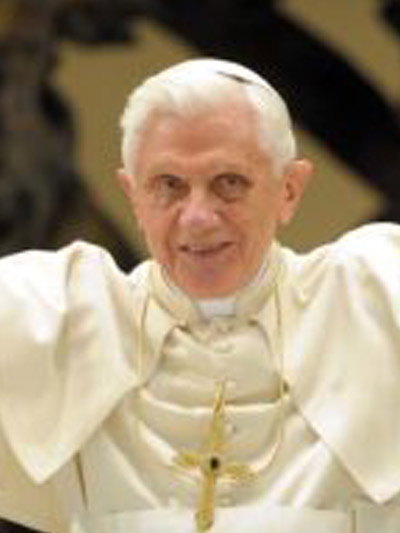
August 26, 2013 from Vatican City
Tribute by Pope Emeritus Benedict XVI.
What you have shared about the Benedict Prize of Mönchengladbach is entirely gratifying.
I was pleased to read the preamble to the statutes: such an initiative will surely encourage people to reflect on the great themes of Western existence and to offer valuable contributions.

December 20, 2013
Tribute by the President of the North Rhine-Westphalia State Parliament, Ms. Carina Gödecke
“One should not wish to foresee the future, but to enable it.”
This quote by the French writer Antoine de Saint-Exupéry perfectly encapsulates how essential each individual’s willingness is to collectively shape our coexistence today, tomorrow, and beyond. Our society relies on pioneers who have the courage to responsibly address the challenges of our time with innovative ideas and concepts based on existing values. I wholeheartedly support the Benedict Prize of Mönchengladbach, which aims to honor the constructive commitment of individuals to a tolerant and future-proof coexistence in Europe. My gratitude goes to the initiators who have infused new life into the Benedict Prize of Mönchengladbach and its idea, thereby making a forward-looking decision.
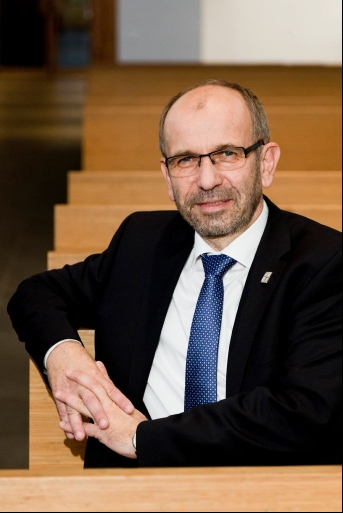
March 20, 2014
Tribute by Manfred Rekowski, Praeses of the Evangelical Church in the Rhineland
The Benedict Prize of Mönchengladbach keeps alive the memory of a man who is also an important witness of faith for Evangelical Christians. For Benedict recommends a synthesis of meaningful work and prayer. This makes him a noteworthy advisor, especially for our time. Benedict of Nursia (480 – 547) lived in a time of upheaval and experienced extensive migratory movements. Perhaps it was precisely this unrest that led Benedict to demand inner and outer steadfastness for monastic life. However, the Western monasticism profoundly shaped by Benedict was not merely an offer of a “Way of Life” carried and determined by our Christian faith and commandment of love. It became a decisive preserver, co-creator, and tradition-bearer of our Western culture throughout Europe. With full justification, Benedict has therefore been called an ambassador of peace, a master of civilization, and a messenger of faith*.
*from the declaration of Pope Paul VI on October 24, 1964, in Montecassino (Elevation of Benedict as “Patron Saint of Europe”)